Should I Step In? – Supporting Independence in Older Adults
What a Coaching Scenario is
Not quiz style. This is judgement practice — you're put inside a real situation from human-services work and asked what you would actually do. It draws on the knowledge you use on the job, not the kind you can look up.
Every choice changes what happens next, and every choice gets a coaching beat straight after it: what drew you toward that option, and how it played out. What's held back is the verdict on your path, so you stay with what you'd genuinely do rather than working out what you're supposed to say.
- 4 decisions
- Each one shaped by the one before it. No two paths through are the same.
- Coaching as you go
- A beat after every decision, naming the pull behind your choice and where it led.
- A full debrief
- Your whole path replayed at the end, with the reasoning behind each decision you made.
- Evidence you can keep
- A completed scenario is recorded in your PracticeLab and appears in your downloadable ProofKit.
Scenarios are made to be talked about. Most people finish one still turning it over, which makes them a ready-made prompt for supervision, a team meeting or a conversation with a colleague — everyone walks the same situation, and comparing where you each landed is often where the real learning happens.
This one ends with
Next time a participant asserts independence, ask yourself: am I about to step in because of a genuine, specific safety signal — or because I'm uncomfortable watching someone take a risk they have the right to take?
The situation
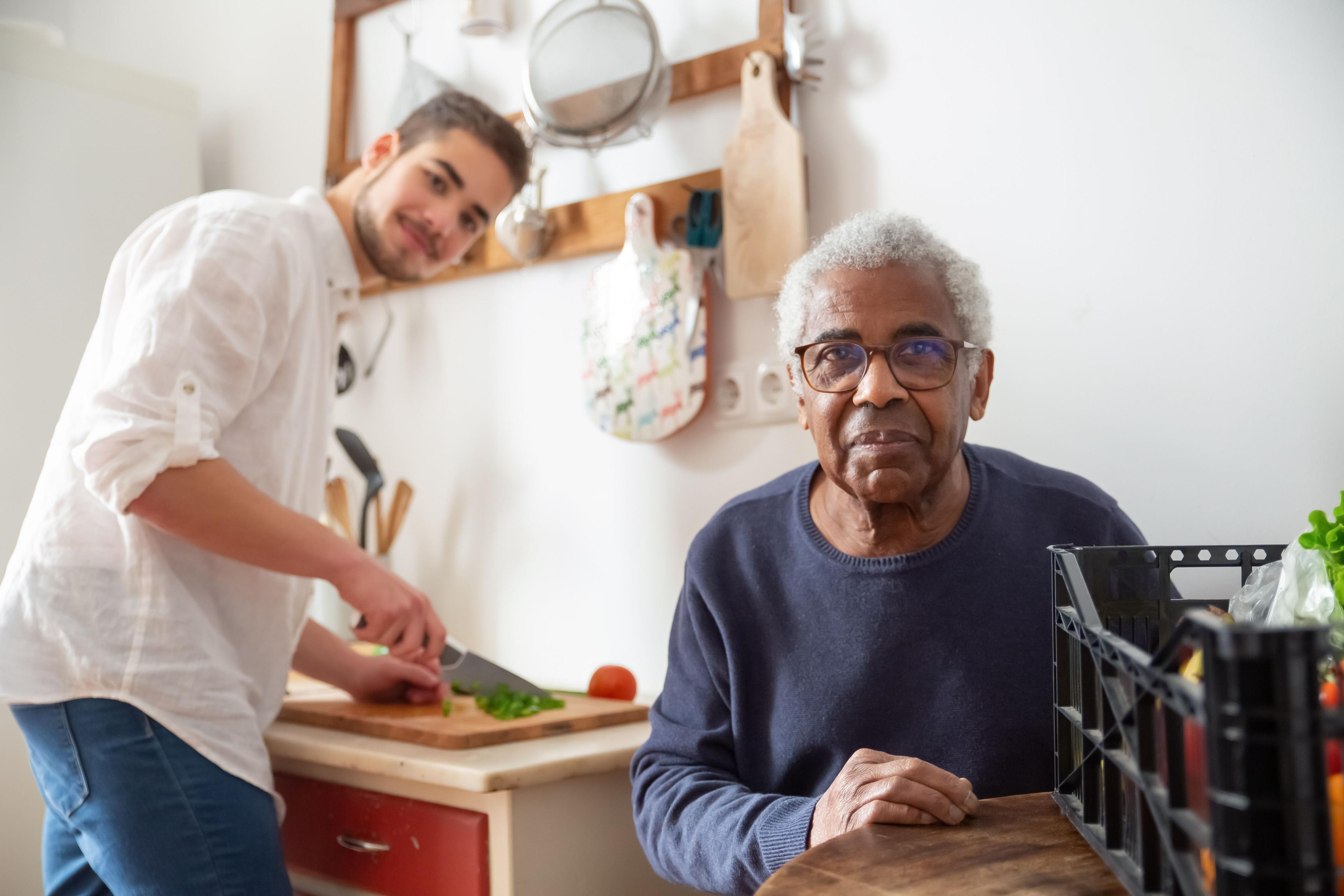
Hector is 78 years old and has been an NDIS participant for two years. He lives alone in the home he has shared with his late wife for over forty years, and independence in that space means everything to him. You are his regular support worker, visiting three mornings a week to assist with domestic tasks and personal care.
This morning Hector tells you he wants to make his own breakfast — including boiling the kettle and making toast — without your help. He is firm about it: "I've been making my own breakfast since I was eight years old. I'm not stopping now." You have noticed over recent weeks that Hector's grip has become less reliable, and last fortnight he knocked a full mug of tea onto the bench. He has not had a formal fall risk or functional capacity review in several months, and his support plan does not include an identified risk for kitchen tasks.
Your organisation's approach is person-centred and strength-based, and your code of conduct requires you to act with respect for each participant's right to make decisions about their own life. At the same time, you have a duty of care and are aware that a burn or a fall in the kitchen could have serious consequences for someone of Hector's age and health. You are not a clinical assessor — the question isn't whether Hector can or can't do this, it's how you respond right now.
Hector is watching you, and he already looks like he's bracing for someone to tell him what he can't do.
What you're practising
Before you start, notice
Real-world decisions in scenarios like this are shaped as much by feeling as by reasoning. People often notice one of these pulls — naming what you feel before you decide is half the skill.
- Protectiveness — the urge to keep someone safe even when they haven't asked for help
- Discomfort with risk — when watching someone struggle feels like negligence
- Over-identification — caring so much that you start making decisions for the person rather than with them
- Conflict avoidance — softening your message so much that the person doesn't get the information they need
Policies this draws on
- NDIS Code of Conduct 2018
- NDIS Practice Standards (Support Provision environment)
- National Disability Insurance Scheme Act 2013
- Your organisation's risk management policy
- Your own organisation's policies take precedence — check them where they apply.
Heads up — coaching scenarios work differently. You'll make a sequence of decisions as the situation unfolds, and after each one you'll get a coaching beat: what drew you toward that choice, and how it played out. The one thing held back is the verdict on the path you took — that lands in the debrief at the end, with your whole walk replayed alongside it.
New to Good Practice Hub? Coaching Scenarios come with PracticeLab Pro, or browse the practice library to see what else is there.
More Coaching Scenarios
See the whole library Coaching Scenario
I've Noticed a Change – What Now? – Responding to Changing Needs in Older Adults
You are a support worker providing regular in-home support to Nora, a 78-year-old woman living alone who has been an NDIS participant for two years. Nora has a plan funded for community access, domestic assistance, and personal care. She's always been chatty and independent-minded, and you've built a warm rapport over eight months of weekly visits.
Client Services · ~10 minutes
 Coaching Scenario
Something Isn't Right – What Should I Do? – Safeguarding Older Adults
You are a support worker visiting Mathilda, a 74-year-old woman who receives NDIS-funded support for daily living tasks. Mathilda lives alone in a unit in a small complex. She has mild cognitive impairment and has been with your organisation for about eight months. Today's scheduled visit is a standard two-hour domestic support session.
Client Services · ~10 minutes
 Coaching Scenario
What do you do when your clients stop showing up?
You are a support worker at a community health and social services organisation working with families experiencing complex needs. Your caseload includes families navigating poverty, unstable housing, health conditions, and involvement with multiple agencies — schools, health services, child protection, and community support programmes.
Client Services · ~12 minutes